Flea and tick remediation requires an integrated indoor-outdoor treatment plan because outdoor wildlife deposits new parasites into residential yards while indoor pupae survive standard vacuuming inside baseboards and…
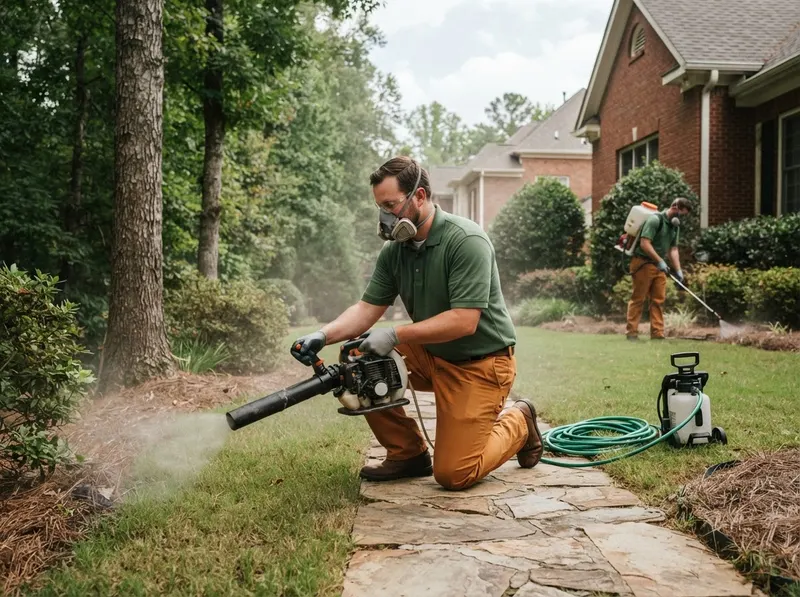
Flea and tick remediation requires an integrated indoor-outdoor treatment plan because outdoor wildlife deposits new parasites into residential yards while indoor pupae survive standard vacuuming inside baseboards and carpet fibers. Marietta properties near wooded expanses such as Kennesaw Mountain National Battlefield Park and the Sope Creek Paper Mill Ruins frequently encounter heavy tick pressure from white-tailed deer and rodents. In residential communities like East Cobb, Indian Hills, and Chimney Springs, shaded pine straw beds and unpaved perimeter trails serve as primary microclimates for brown dog ticks and lone star ticks. When an active breach occurs indoors, standard broadcast yard sprays fail to address flea larvae nesting deep within home carpets, furniture fabrics, and crawlspace moisture layers.
A dedicated home and yard program applies insect growth regulators (IGRs) indoors alongside targeted botanical or microencapsulated outdoor perimeter barriers. Indoor protocols target baseboard edges, carpet pile, and underneath furniture where 95 percent of flea populations exist as eggs, larvae, or pupae rather than biting adults. Outdoors in neighborhoods like Whitlock Heights, Somerset, and Atlanta Country Club, treatment focuses on high-humidity zones including beneath deck structures, shaded turf, ground-cover ivy, and property borders within 10 to 30 feet of exterior foundations. This approach stops migrating ticks from crossing the building boundary into family living areas without soaking central lawn open spaces in unnecessary chemicals.
Selecting whole-home and yard remediation over standalone pet topical medication addresses the environmental reservoir where re-infestation originates. While veterinary topicals kill adult fleas feeding directly on treated animals, they leave pupae in floor cracks and ticks lingering along outdoor walkways unaffected. The remediation protocol operates in three sequential phases: first, mechanical extraction of indoor debris and immediate laundering of pet bedding; second, indoor crack-and-crevice application using juvenile hormone blockers that halt larval maturation; third, targeted liquid misting along exterior shaded soil and landscape perimeters. Properties in Battleview, Forest Hills, and West Park with mature hardwoods achieve complete population collapse within 14 to 21 days as residual barriers neutralize emerging adults.
Every job gets a firm, written price after a free on-site visit.
Tell us about your flea and tick yard and home remediation job in Marietta and we'll send a clear, written quote, usually the same day.
 Timberline Pest Control