Pest Control Service Marietta delivers targeted perimeter defense and internal exclusion protocols designed to secure homes against wood-destroying insects, seasonal vectors, and interior intrusions. Searching for an effective pest control service near me requires evaluating treatment safety, technician precision, and environmental barrier longevity.

Pest Control Service company in Marietta is a structural defense and biological management discipline that systematically eliminates active infestations and seals exterior entry points to safeguard residential structures.
Every service reflects the same meticulous attention to detail, whether it's a single job or a larger pest control service project across Marietta.
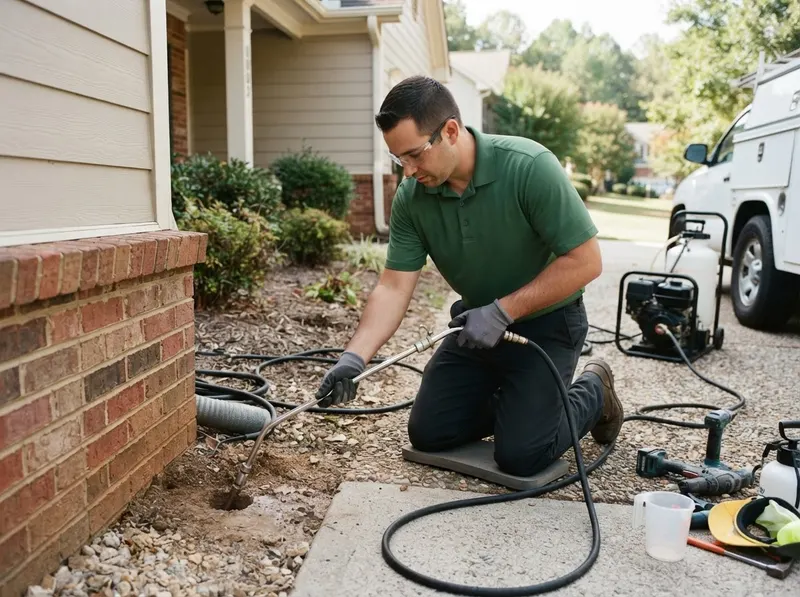
Liquid non-repellent barrier trenching and targeted bait system installations neutralize subterranean termite colonies moving upward through moist North Georgia clay soils into crawlspaces and sill plates. Technicians excavate continuous perimeter trenches measuring six inches wide by six inches deep directly adjacent to exterior foundation walls and interior crawlspace masonry piers. Termiticide is applied at calculated label rates of four gallons per ten linear feet per foot of depth, creating an undetectable chemical transfer zone that foraging worker termites carry back to the subterranean queen. Masonry drill-outs along contiguous concrete patios and garage slab transitions allow pressurized sub-slab injection every twelve inches to eliminate hidden structural access channels. Installation of low-profile, tamper-resistant monitoring stations along perimeter turf borders provides continuous quarterly subterranean activity tracking, backed by annual visual timber inspections across structural floor joists, rim joists, and subfloor sheathing.
Get a quote →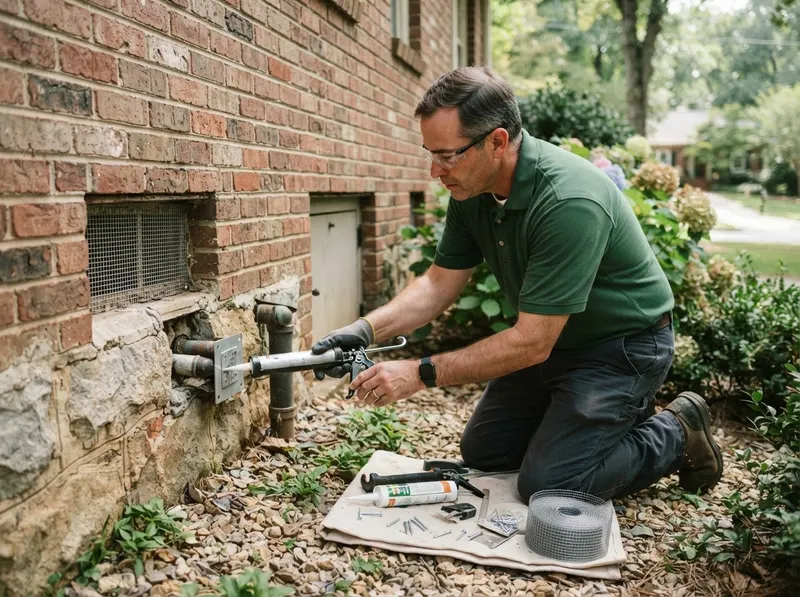
Comprehensive mechanical exclusion seals exterior crawlspace vents, roofline gaps, and weep holes with galvanized steel mesh to halt Norway rat and roof rat entry, accompanied by targeted interior mechanical trapping. Technicians conduct full-envelope structural audits inspecting foundation transitions, plumbing penetrations, corner trim junctions, and soffit tie-ins where exterior gaps exceed one-quarter inch. Technicians secure 19-gauge galvanized quarter-inch hardware cloth, copper wire stuffing, and hybrid elastomeric polyurethanes across every identified architectural breach to prevent gnawing re-entry. Interior eradication protocols reject open anticoagulant rodenticide placements within living areas to prevent unrecovered carcass decomposition inside wall cavities. Instead, precision arrays of snap traps, electronic monitoring boxes, and mechanical capture stations are deployed in attics, drop ceilings, and crawlspaces, followed by systematic carcass removal, biological sanitation, and enzyme-based pheromone neutralizers to break established entry trails.
Get a quote →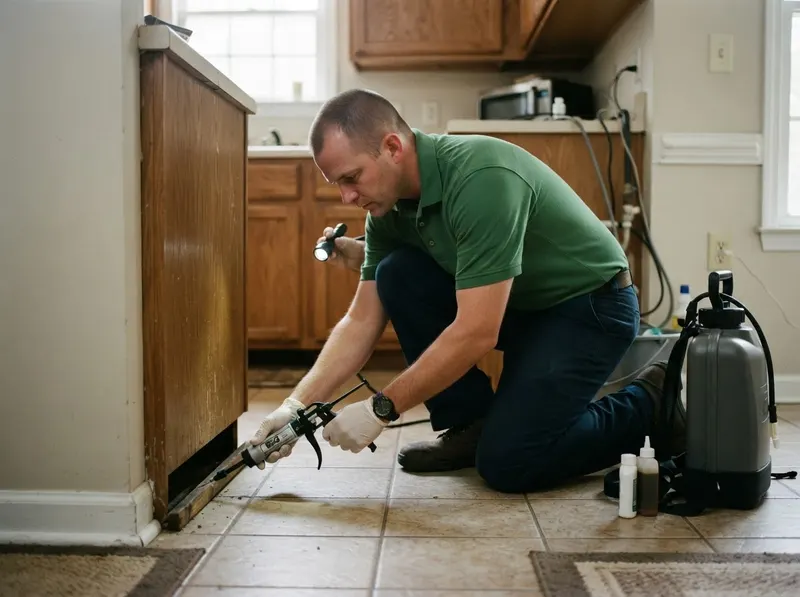
Systematic crack-and-crevice baiting using precision insect growth regulators halts breeding cycles of German and American cockroaches across commercial and residential moisture zones. The remediation protocol begins with detailed visual inspections of kitchen cabinetry hinges, sub-sink plumbing cutouts, appliance motor housings, and utility closets using high-output inspection lights and articulating optical mirrors. Technicians deposit micro-droplets of non-repellent abamectin and dinotefuran gel baits directly into deep structural harborages where roaches aggregate, strictly preventing contamination of exposed food preparation surfaces. Formulations incorporate chitin-synthesis inhibitors and insect growth regulators that disrupt nymphal molting and sterilize adult females, collapsing multi-generational breeding colonies within fourteen to twenty-one days. In crawlspaces and utility raceways subject to American cockroach invasions, technicians apply low-odor synthetic pyrethroid dusts into dry wall voids and install heavy-duty exterior perimeter insect barriers to block moist exterior harborages.
Get a quote →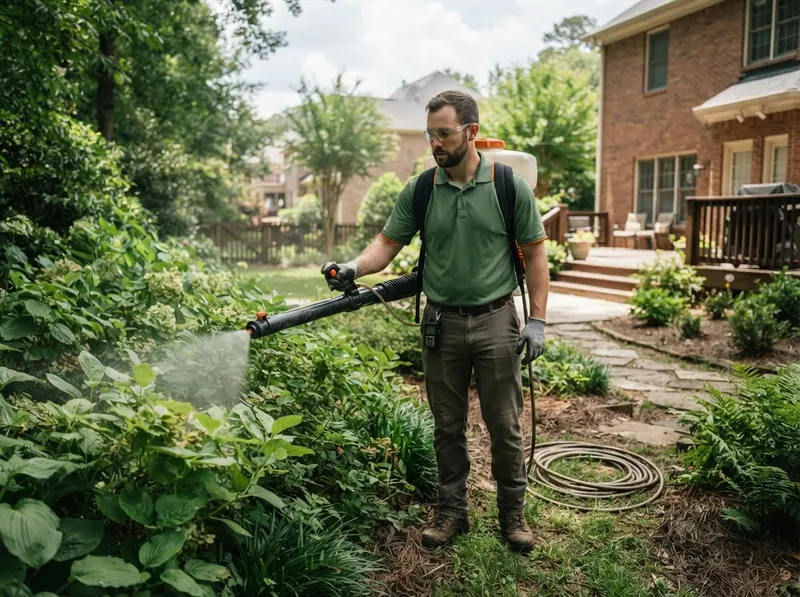
Focused micro-encapsulated foliar applications and biological larvicide treatments applied to shaded deciduous foliage and stagnant drainage zones interrupt breeding cycles from April through October. Service technicians utilize specialized backpack mist blowers producing calibrated 50-to-100 micron droplet spectrums to treat the undersides of dense ornamental shrubbery, ivy groundcovers, structural eaves, and perimeter tree lines up to ten feet high where adult mosquitoes harbor during daytime heat. Specialized micro-encapsulated pyrethroids adhere tenaciously to leaf undersides, resisting breakdown from heavy North Georgia summer thunderstorms and providing up to twenty-eight days of continuous residual contact control. Standing water zones, including landscape catch basins, French drain discharge basins, decorative pond margins, and unchlorinated retention areas, receive granular Bacillus thuringiensis israelensis (BTI) microbial briquettes that selectively eliminate mosquito larvae within twenty-four hours without harming domestic pets, fish, or beneficial insect populations.
Get a quote →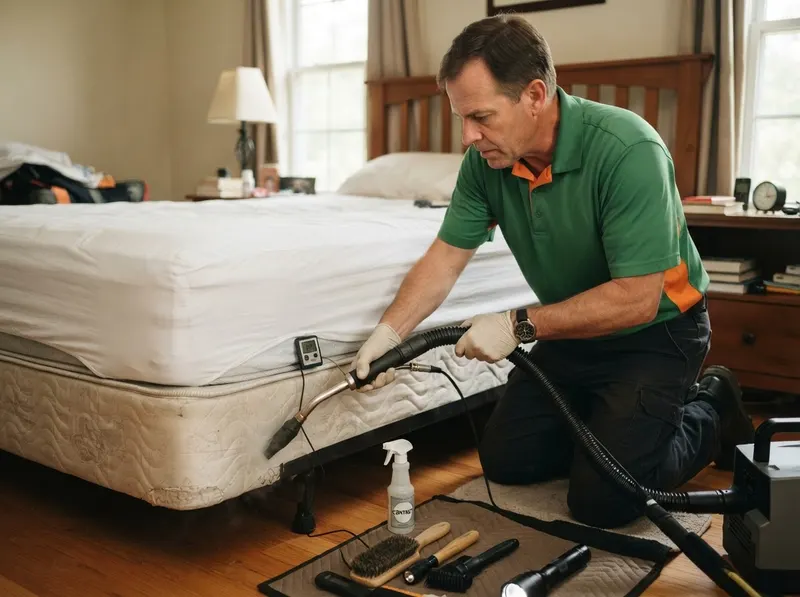
Localized thermal elevation paired with targeted desiccant dust treatments eradicates bed bug populations and egg clusters lodged within mattress seams, baseboards, and structural wall framing. Structural thermal remediation employs mobile industrial heating units and high-velocity axial fans to elevate room ambient air temperatures to a target thermal zone between 122°F and 135°F. This lethal thermal threshold penetrates mattresses, box springs, upholstered furniture, baseboard hollows, and structural wall voids, terminating all bed bug life cycles, including heat-resistant eggs and hidden nymphs, in a single eight-hour treatment cycle without chemical residues. For localized treatments, technicians execute meticulous crack-and-crevice injections of amorphous silica gel dust, an inert desiccant that permanently disrupts the waxy outer lipid layer of the bed bug cuticle, causing rapid dehydration and death upon contact. All treatments include mattress encasement installation and non-chemical active-attractant interceptor monitors placed under bed posts to track long-term remediation.
Get a quote →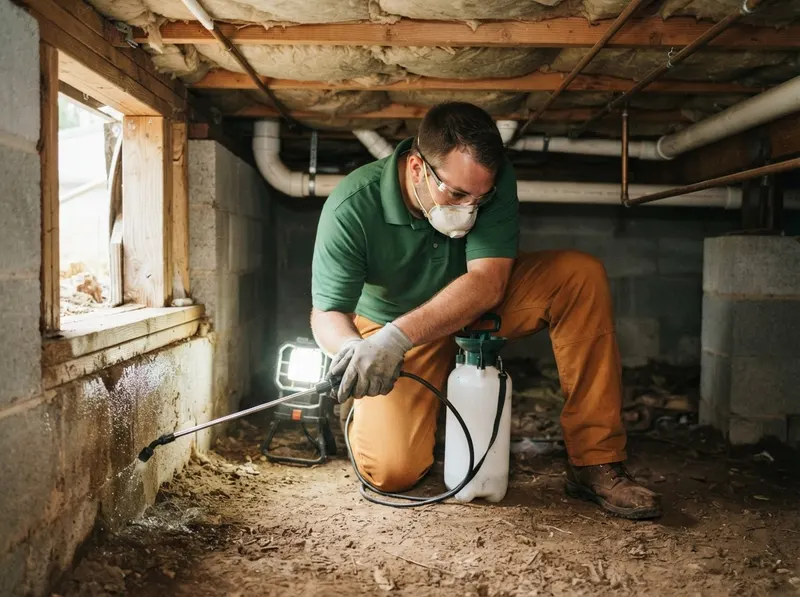
Precision vapor retardant treatments, soil boundary applications, and moisture mitigation protocols discourage wood-boring beetles, subterranean pests, and silverfish beneath residential living subfloors. Technicians clear biological debris, decayed construction timber, and termite attractants directly from bare crawlspace earth before trenching foundation piers. A continuous heavy-duty multi-mil polyethylene puncture-resistant vapor retarder is custom-fitted across the soil grade, seam-sealed with acrylic mastic tape, and mechanically fastened up masonry foundation footings to choke off rising capillary soil moisture. Foundation walls, rim joists, and structural sill plates undergo direct topical spray applications of disodium octaborate tetrahydrate (DOT), which diffuses deeply into raw structural wood fibers to establish permanent resistance against wood-destroying fungi, powderpost beetles, and subterranean termites. Interior perimeter soil perimeters receive targeted insecticidal granules to eliminate camel crickets, centipedes, and moisture-loving arthropods residing in foundation voids.
Get a quote →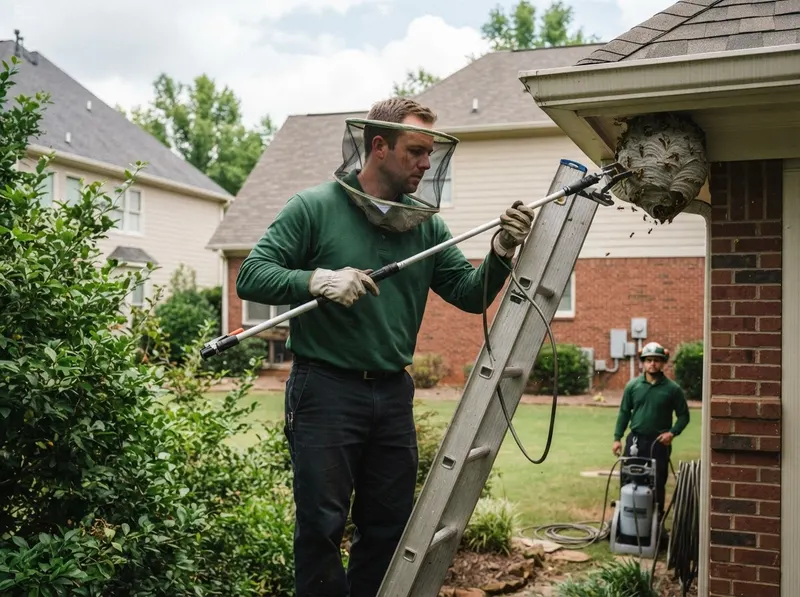
Direct mechanical removal and targeted void treatments extinguish aggressive yellowjacket, hornet, and paper wasp colonies established inside soffits, structural voids, and tree hollows. Protective full-body bee suits and dedicated positive-pressure respirators protect technicians executing structural extractions. For concealed colonies nesting within residential exterior walls, soffits, or attic eaves, technicians pinpoint the subterranean or architectural nesting core using high-sensitivity acoustic and thermal imaging equipment. Pressurized non-repellent insecticidal aerosols and micro-fine insecticidal dusts are injected directly through single-drill access holes or established exterior entry vents to rapidly eliminate the queen and aggressive foraging workers without driving angry insects into indoor living spaces. Following complete chemical knockdown, technicians physically cut away and remove the paper comb structures, nest debris, and dead larvae, followed by an enzymatic cleanse of the cavity to strip away residual aggregation pheromones that attract secondary scout queens the following spring.
Get a quote →
Regulatory-compliant structural treatments tailored for food preparation facilities deploy non-volatile monitoring stations, mechanical grease traps, and targeted micro-gel placements. Operating under strict compliance with Georgia Department of Agriculture standards and food safety sanitation regulations, technicians install low-profile tamper-resistant insect and rodent traps beneath stainless steel prep tables, behind refrigeration compressors, and within dishwashing staging areas. Technicians utilize targeted applications of non-volatile micro-gel baits and insect growth regulators within plumbing voids, tile junction cracks, and electrical junction boxes, eliminating chemical broadcast hazards near exposed culinary staging stations. Bi-weekly or monthly visual audit logs document insect catch counts, sanitation deficiencies, structural moisture spikes, and door sweep seals. Grease trap rims and wet floor drains receive biological foam bio-cleaners loaded with specialized bacteria that digest organic floor scum, eliminating the primary breeding media for phorid flies and drain flies.
Get a quote →You get a firm, itemized quote for your pest control service before any work begins, no surprises, no pressure.
Careful prep, tidy work, and a full cleanup when we are done. We treat your home and belongings like our own.
The same trusted, background-checked team from the first call to the final check.
Property owners balancing long-term protection against urgent pest eradication face distinct procedural choices. If an active infestation is detected inside wall voids or living spaces, select targeted chemical or botanical injection combined with localized trapping; if structural vulnerability is the primary concern, choose comprehensive envelope exclusion and foundation repellant barriers. The practical trade-off centers on intervention speed versus permanent structural defense: localized chemical sprays rapidly knock down active adult insects inside living quarters but leave physical entry points unsealed, whereas complete mechanical exclusion and perimeter barrier trenching demand a larger initial investment of time and resources while systematically preventing seasonal re-infestation.
Selecting targeted interior crack-and-crevice baiting provides an immediate reduction in breeding German cockroach nymphs within 72 hours, yet it does not halt outside American cockroaches from entering through unsealed crawlspace vents or door sweeps. Conversely, prioritizing exterior mechanical exclusion seals entry points along rooflines and foundations, protecting structural framing against rodents and wood-destroying organisms, but requires supplemental indoor trapping if pests have already established active interior nesting pockets. When managing seasonal exterior pests like mosquitoes or yellowjackets, selecting surface-contact adulticides creates a short-term knockdown zone lasting 14 to 21 days; alternatively, choosing biological larvicide briquettes alongside mechanical source reduction removes the standing water breeding habitat entirely, delivering sustained population suppression throughout the North Georgia humid summer with zero chemical impact on indoor air quality or surrounding garden pollinators.
For structural timber protection, property owners face the decision between localized spot treatments with expanding borate foam or a continuous non-repellent liquid soil trench around the entire perimeter foundation footing; spot treatments resolve an isolated subfloor termite gallery at a lower upfront cost, whereas complete perimeter trenching establishes a contiguous chemical transfer barrier through the dense red clay that neutralizes subterranean worker termites before they ever contact framing plates, subfloors, or sill timbers.
Every project gets a firm, written price after a free on-site visit. Ranges below for orientation.
Tell us about your pest control service job and we'll send a clear, written quote, usually the same day. Or just call and talk to a real Marietta pro.
(678) 737-7109
Homes constructed along the base of Kennesaw Mountain National Battlefield Park and the humid corridors near the Sope Creek Paper Mill Ruins experience severe pest migration pressure driven by dense canopy cover and heavy clay runoff. Subterranean termites thrive in Cobb County red clay, exploiting hairline settlement cracks along masonry foundations. Older structures adjacent to the historic Cobb County Courthouse and Glover Park often feature vented crawlspaces and mature framing that require precise mechanical exclusion rather than simple chemical surface spraying. Modern subdivisions situated around the Atlanta Country Club and Indian Hills frequently encounter rodent intrusions along expansive rooflines, where roof rats travel through mature oak and pine canopies to access attic ridge vents and soffits. Properties in East Cobb and Chimney Springs feature dense pine straw landscape beds directly abutting stucco and brick veneer exteriors, establishing optimal harborage for Argentine ant supercolonies and smokybrown cockroaches. Structural foundation dynamics in neighborhoods like Whitlock Heights, Battleview, Forest Hills, and West Park are heavily dictated by the local water table and sloped topography; heavy precipitation saturates the upper clay strata, driving subterranean moisture vectors like camel crickets and centipedes out of saturated soil and upward into crawlspaces. In Historic Marietta Square and residential historic districts along Whitlock Avenue, century-old timber framing and fieldstone masonry foundations lack modern termite shields, creating hidden ground-contact pathways where subterranean termites construct shelter tubes up foundation walls. Addressing these hyper-local Cobb County biological conditions demands a customized environmental strategy: replacing organic mulch bands near foundation slabs with decorative gravel, mechanically screening crawlspace ventilation grilles with rust-resistant hardware cloth, and applying specialized soil termiticides directly to the dense clay interface beneath concrete footings to provide a permanent defensive perimeter against invasive pests.
Free estimates for Marietta & the surrounding area.
 Timberline Pest Control